Household budget planner: keep four savings categories separate
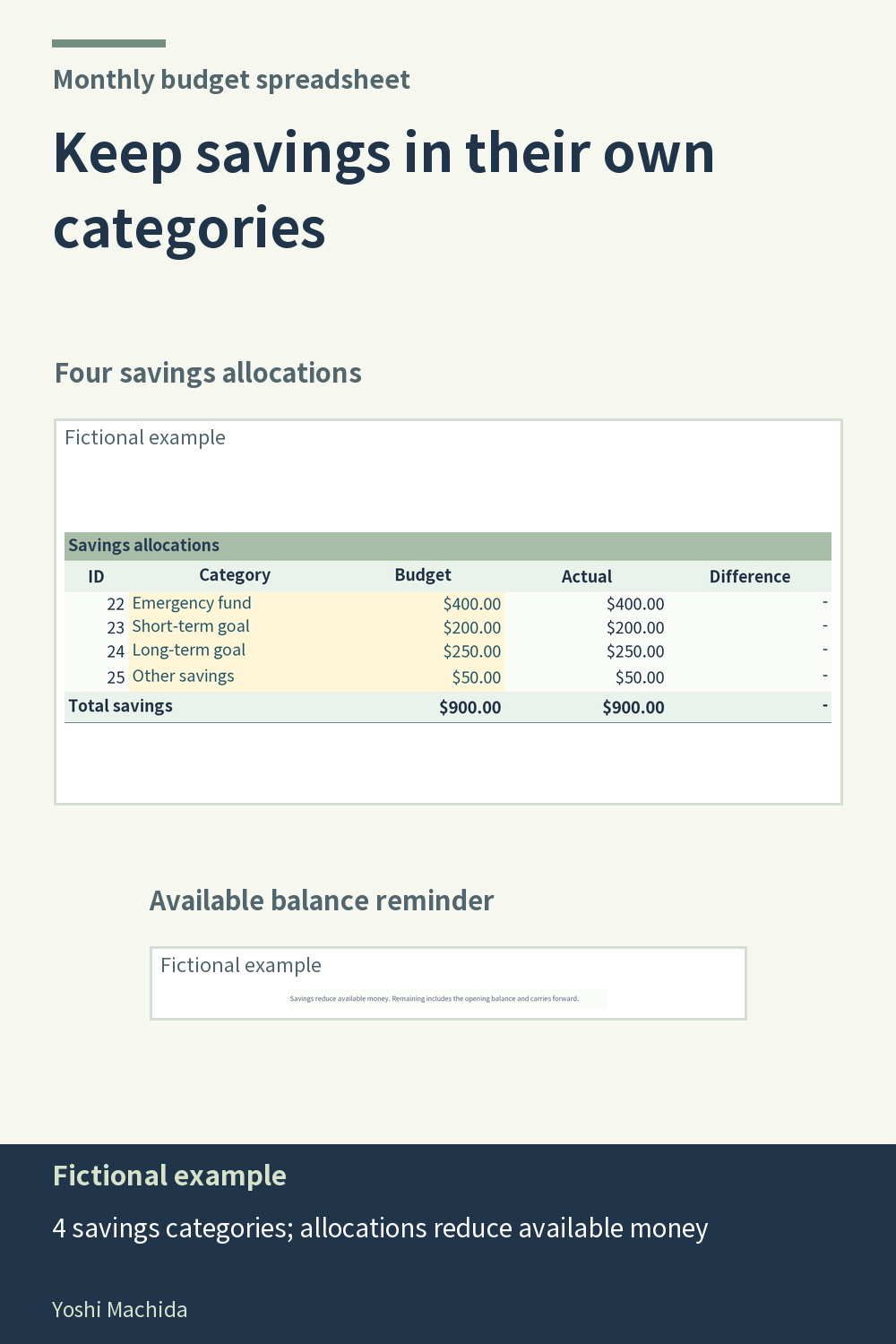
Savings have their own category section in this planner. The image shows four savings categories with budget, actual and difference columns. Read the section as a record of allocations away from the available budget, rather than as an investment account statement. Sample figures are fictional.
When recording an allocation, use the intended savings category code on the correct month's tab. The workbook calculates actual savings from the recorded entries. Read a category's budget and actual amounts together before looking at its difference, then inspect the section total for the combined recorded allocations.
Savings entries are deducted when calculating the remaining balance. They are also separate from the expense breakdown charts. These definitions explain why you can see savings in the category table and the savings allocation rate without seeing them as expense-mix slices. The rate is recorded savings divided by recorded income, not investment growth.
In any table, a separate section is helpful only if its meaning stays consistent. Keep a short note of what the section records and avoid mixing account balances with transaction allocations in the same review. If an actual amount looks unexpected, return to its records and category codes. This page describes the workbook's bookkeeping structure; it does not recommend a savings amount, a target rate or an investment choice.