Household budget planner: read the savings allocation rate
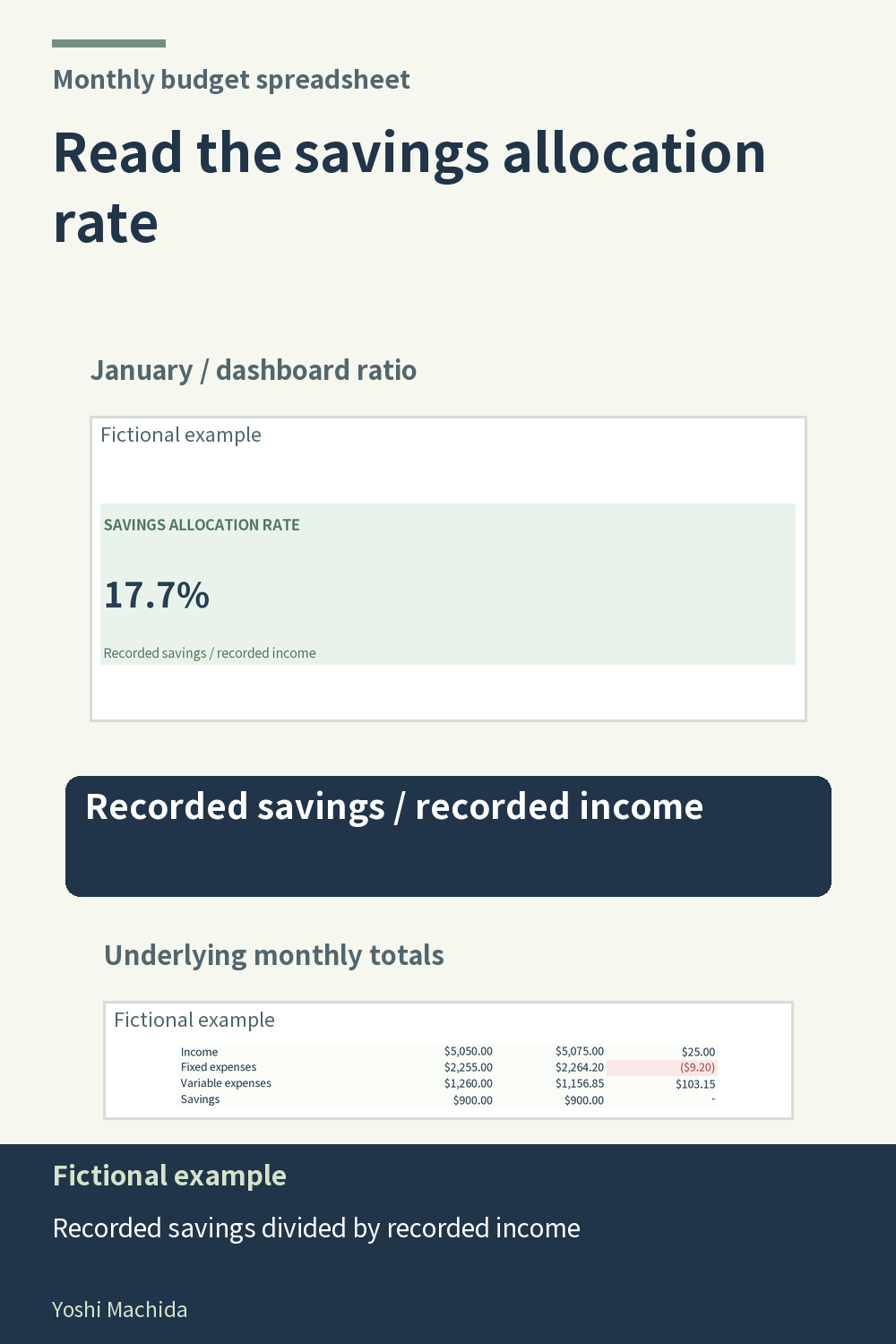
A percentage needs a definition to be useful. In this planner, the savings allocation rate is recorded savings divided by recorded income. The dashboard label and its nearby explanation belong together: one shows the result, and the other tells you how to read it. Sample figures are fictional.
First inspect the month's recorded income and savings totals. Then read the rate as a relationship between those two amounts. Savings entries represent money allocated or transferred away from the available budget. They are deducted when the workbook calculates the remaining balance. The rate describes that budgeting relationship, not investment growth or an account's return.
When recorded income is zero or negative, the rate is left blank. A blank result under that condition is different from a measured rate of zero. Before treating a missing percentage as an entry problem, check the recorded income and the definition of the measure.
For any ratio in a table, write its numerator and denominator beside your review note. This makes it easier to compare like with like and to explain the figure later. Review completed months when comparing results, because additional records can change both parts of the ratio. This page explains how to read the workbook's measure; it does not set a target percentage or recommend an amount to allocate.