Budget spreadsheet: 25 income, expense and savings categories
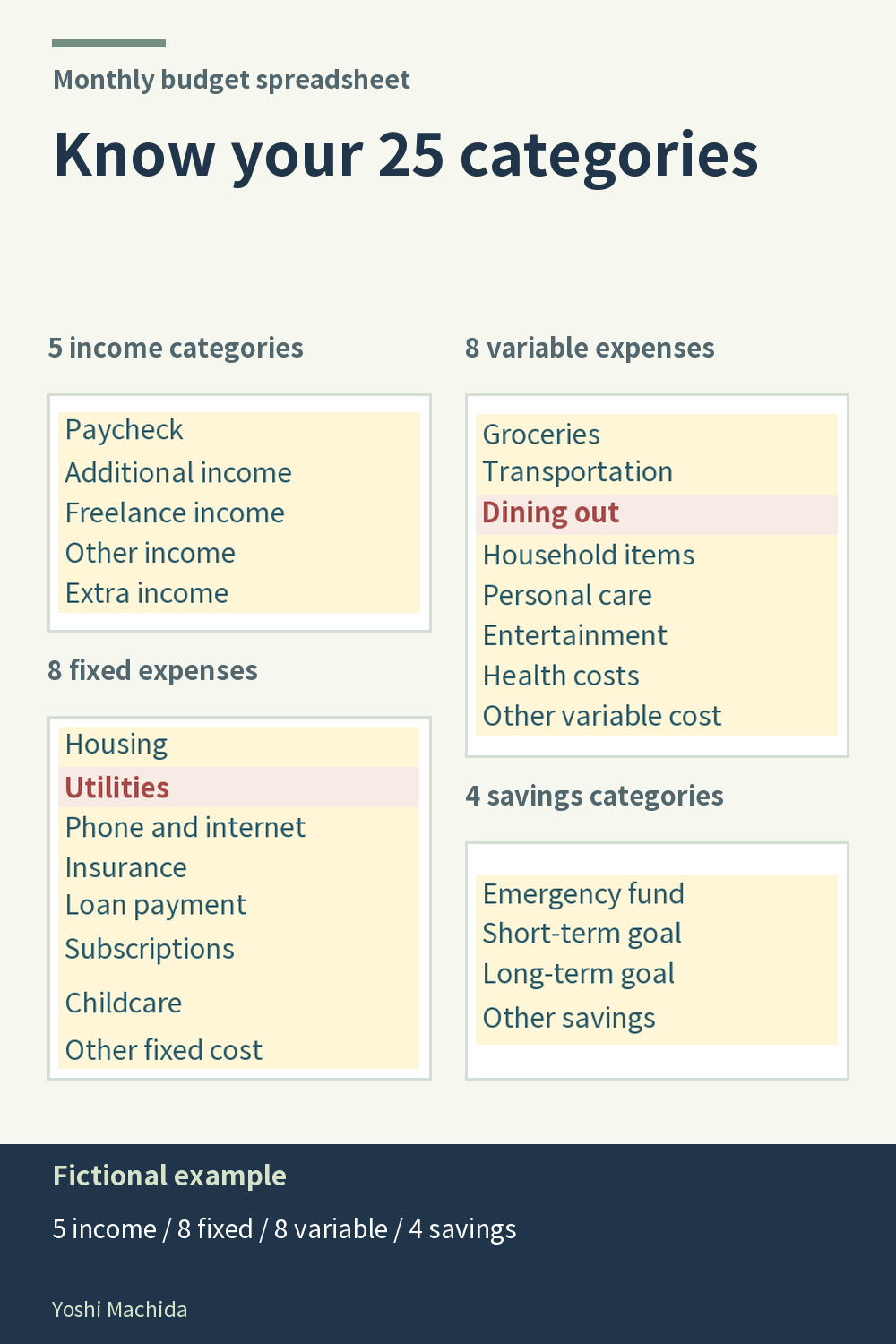
A category list works as a reference between planning and recording. The planner provides twenty-five categories arranged in four groups: five income, eight fixed expense, eight variable expense and four savings categories. This view groups the category labels for easy reference. Sample figures are fictional.
When entering a transaction, look up the category that describes the item you intend to record, then use its code on the correct month's tab. Read the displayed category beside the entered code before continuing. The label helps you recognize the category; the code connects the recorded amount to its total.
Read the groups separately rather than treating all twenty-five rows as one undifferentiated list. Income adds recorded inflows. Fixed and variable expenses are expense groups. Savings allocations are separate and reduce the available budget in this workbook. Those distinctions explain why a savings entry should not be read as an expense-chart slice or investment growth.
A useful reference habit is to keep the category list beside a batch of records while you enter them. If you pause and return later, begin with the category reference again instead of guessing a code from memory. This approach applies to any coded table. Consistent use of the reference makes a later review easier, without requiring you to include unnecessary personal information in transaction descriptions.