Household budget planner: starting balance and monthly carry-forward
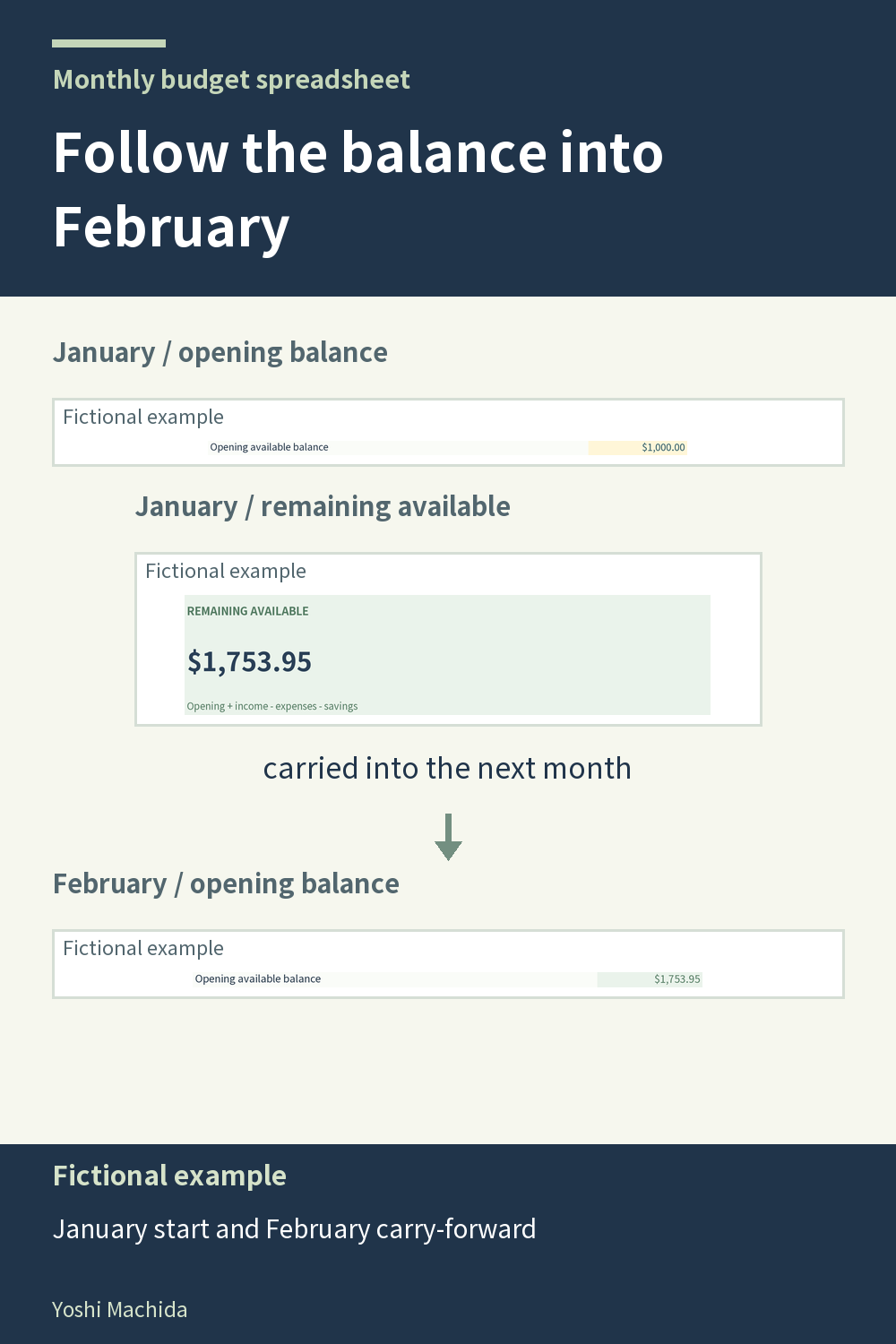
An opening balance and a monthly transaction total describe different things. The opening balance is the starting point; the month's recorded income, expenses and savings change what remains. This image pairs January's starting balance with February's opening balance so the connection is visible. Sample figures are fictional.
When setting up the planner, enter January's opening balance and set the monthly budgets. January's calculated remaining balance carries forward into February, and the same connection continues through later months. Do not treat each later opening amount as a fresh monthly income entry. Doing so would count the starting money again as activity.
To trace a balance, read January's opening amount, its recorded activity and its remaining amount in that order. Then check February's opening cell. The planner deducts savings allocations as well as fixed and variable expenses when calculating the remaining balance. That definition is useful to keep beside the figures while reviewing the carry-forward.
A practical table-reading tip is to label your starting point separately from the changes during the period. This works in a simple handwritten table too. If the next month's starting point seems unexpected, inspect the previous month's records first. The carry-forward shows the effect of recorded activity; it does not confirm that every transaction has been entered.